

Living with Hashimoto’s disease can feel like an uphill battle, with its silent onset, misunderstood symptoms, and often overlooked root causes. But this isn’t just another thyroid issue—it’s a complex autoimmune condition that impacts every aspect of your well-being. The truth is, you’re not alone, millions of people, just like you, are struggling with this condition.
Today, we’re uncovering hidden facts about Hashimoto’s, empowering you with the knowledge to take back control of your life and pave the way for a brighter future.
Are you ready to reclaim your health? Let’s dive in.
Hashimoto’s disease is one of the most misunderstood health conditions affecting people today. Often mistaken for just another thyroid issue, this autoimmune disease runs much deeper. Hashimoto’s disease can affect more than just your thyroid gland.
The root cause of Hashimoto’s disease is found in your immune system, and your thyroid gland is the victim of this dysfunction. The solution to Hashimoto’s disease is found in your immune system and not the thyroid gland itself.
But here’s the good news: understanding Hashimoto’s is the first step toward reclaiming your health. By uncovering the truths about this condition, you can take charge, make informed decisions, and pave the way for a healthier, more vibrant life.
10 Things You Must Know About Hashimoto’s
1. Doctors Don’t Treat It
Doctors don’t do anything to treat Hashimoto’s disease. There are no drugs given to treat your immune response or to protect the thyroid gland from the autoimmune attack. Doctors will prescribe thyroid hormone medications only after enough damage to the thyroid gland has occurred to warrant it, but that is all. There is no treatment of the underlying disease, which lies with your immune system.
If you have high antibody levels but don’t have clinical hypothyroidism, your healthcare provider will likely monitor your thyroid levels instead of starting treatment. If Hashimoto’s disease leads to hypothyroidism, the go-to treatment is a medication called levothyroxine.
2. Most Common Cause of Hashimoto’s Disease
Hashimoto’s disease is the leading cause of hypothyroidism in the United States, often going undiagnosed for years as symptoms gradually develop. This disease damages the thyroid gland, resulting in less production of the thyroid hormones called T4 and T3. If these hormones decline too far, hypothyroidism occurs.
Unlike hypothyroidism in some regions of the world caused by iodine deficiency, Hashimoto’s is often triggered by genetic predisposition and environmental factors like stress or infection. Hashimoto’s disease is NOT caused by iodine deficiency. In many cases, taking iodine can make Hashimoto’s worse.
“If you have Hashimoto’s disease or other types of autoimmune thyroid disorders, you may be sensitive to harmful side effects from iodine. Eating foods that have large amounts of iodine—such as kelp, dulse, or other kinds of seaweed, and certain iodine-rich medicines—may cause hypothyroidism or make it worse.”
“an increase of thyroid autoantibodies (TPOAb and/or TgAb) following implementation of iodized salt has been consistently reported”
“Adequate iodine intake is necessary for normal thyroid function. Iodine deficiency is associated with serious complications, but also iodine excess can lead to thyroid dysfunction, and iodine supplementation aimed to prevent iodine deficiency disorders has been associated with development of thyroid autoimmunity.”
3. Your Immune System is the Problem
Hashimoto’s is an autoimmune disease, not just a thyroid disorder. The immune system mistakenly attacks your thyroid gland, causing inflammation, damage and reduced function.
Hashimoto’s disease is typically diagnosed when autoantibodies are detected on blood tests. These 2 autoantibodies are:
- TPOAb / Thyroid peroxidase antibody
- TgAb / Thyroglobulin antibody
“A healthy immune system defends the body against disease and infection. But if the immune system malfunctions, it mistakenly attacks healthy cells, tissues, and organs. Called autoimmune disease, these attacks can affect any part of the body, weakening bodily function and even turning life-threatening.”
The focus of your efforts to heal must be directed at your immune system and how it functions. Autoimmune diseases occur when the immune system fails to regulate itself. In the case of Hashimoto’s disease, the immune system has mistaken your thyroid gland for an enemy and is trying to destroy it.
4. Get More Diseases
People with Hashimoto’s are at a higher risk of developing other autoimmune diseases, such as celiac disease, vitiligo, type 1 diabetes, or rheumatoid arthritis. Once the immune systems mistakes one of your tissues for an enemy to be destroyed, it is more likely to make additional mistakes.
If you have Hashimoto’s disease, it does not mean your immune system is weak or overactive. It’s not a problem of too much or too little immune system function. It’s a problem of immune regulation. The immune system has made a mistake. It’s attacking your body instead of protecting it. Protection and healing are the healthy functions of your immune system.
“Having Hashimoto thyroiditis also increases your risk for other autoimmune illnesses.”
5. Confusing Hashimoto’s Symptoms
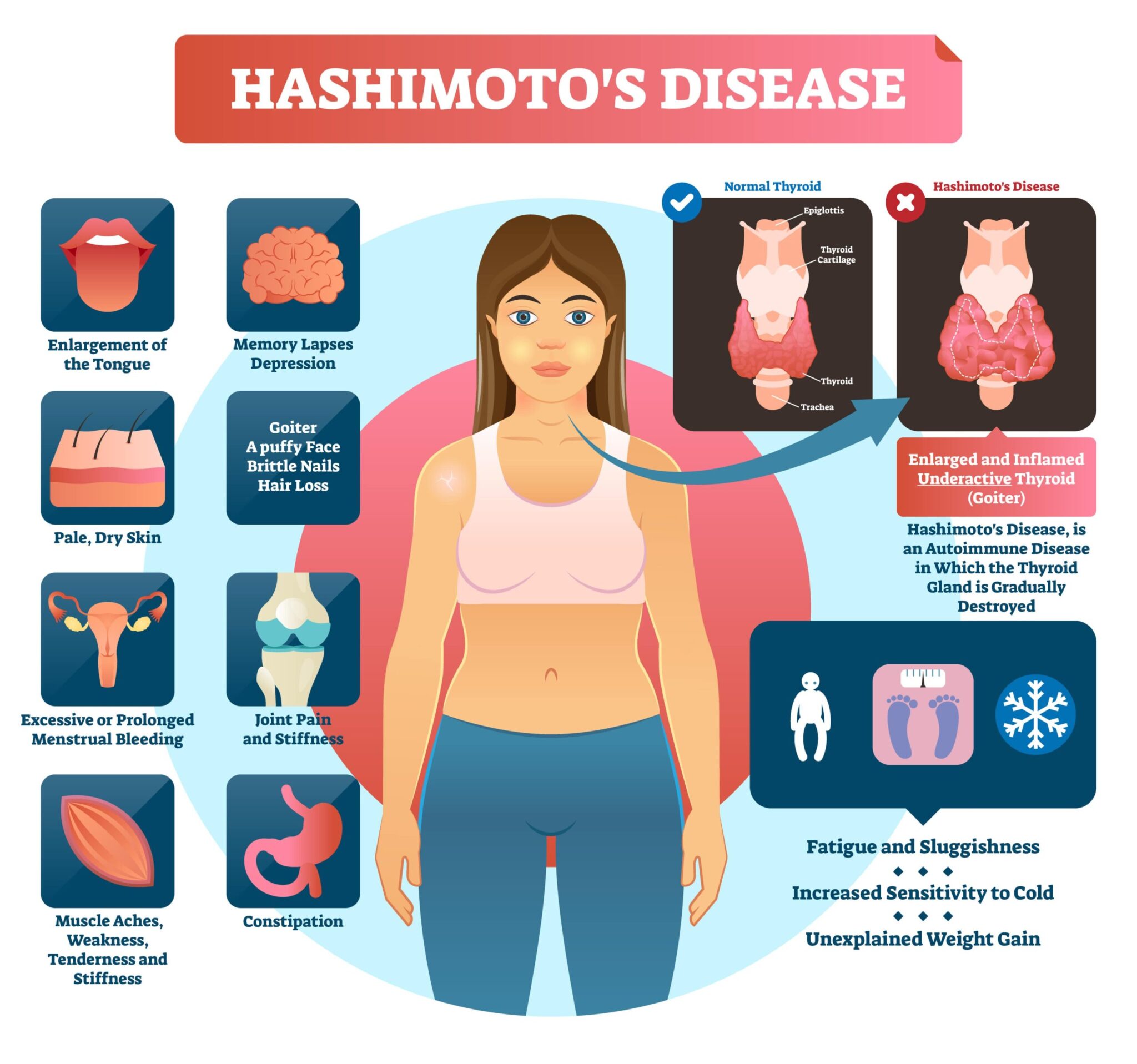
Early symptoms are often nonspecific which can lead to misdiagnosis or delayed diagnosis. There are many symptoms you can experience that are not the classic “hypothyroidism” symptoms
Hashimoto’s Disease Symptoms
- fatigue
- weight gain
- thinning hair
- brittle nails
- brain fog / problems concentrating
- depression
- anxiety
- infertility
- heavy or irregular menstrual cycle
- muscle pain
- joint pain
- constipation
- intolerance to cold environment
While this is not a complete list of all possible signs and symptoms, these are some of the most common.
6. “Normal” Thyroid Tests
Many patients with Hashimoto’s have “normal” thyroid hormone levels yet still experience symptoms due to immune system activity and inflammation.
Unfortunately, most doctors are only going to monitor your hormone levels, which in many cases will be normal. The symptoms you are experiencing are how your immune system is affecting other parts of your body.
You are experiencing the symptoms of hypothyroidism, but you don’t have hypothyroidism if your hormone levels are in normal range. The symptoms you are experiencing are how your immune system is affecting the rest of your body.
“There is evidence that women with elevated TPOAb and/or TgAb are at increased risk of infertility even if the thyroid hormone level is within a normal range…”
(TPO Ab and TgAb are the antibodies of Hashimoto’s Disease)
7. Your Mental Health
Hashimoto’s is linked to mood disorders like anxiety and depression, as thyroid hormones play a crucial role in brain function and neurotransmitter regulation.
“We also know that even in patients with normal thyroid (hormone) function but with elevated Anti-TPO antibodies, their presence correlates with a higher risk of anxiety and mood disorders.”
8. Diet
Certain dietary changes, like eliminating gluten or other food sensitivities and food allergens can help reduce inflammation and improve symptoms. Most of your immune system is in your gut. What you put in your body will influence your immune system, especially if you have Hashimoto’s disease.
People often get confused about why their immune system attacks certain foods. How “healthy” a food is, has nothing to do with how your immune system responds to it.
Most of the foods people have an allergy to sensitivity to are considered “healthy.”
“These eight foods account for 90 percent of food allergic reactions. They are milk, eggs, fish, tree nuts, shellfish, peanuts, wheat and soybeans.”
But here is the problem… if certain foods trigger your immune system it will increase the autoimmune attack on your thyroid gland.
If you have an unhappy immune system, why would you want to antagonize it with the food you’re eating?
“Hashimoto’s is an autoimmune disease in which thyroid cells are attacked through cell-and antibody-mediated immune processes. A gluten-free diet reduces antibody concentration and regulates thyroid autoimmunization.”
“Your gut is your largest immune system organ, containing up to 80% of your body’s immune cells.”
There are different ways foods can be problematic for your body. Some foods are classified as food allergies, others are food sensitivities and yet others are food intolerances.
The bottom is that eating foods that are difficult for your body to process…for whatever reason, is yet another stressor you are putting on your immune system and body every time you do it.
9. Up and Down
Hashimoto’s symptoms can vary over time. Anything that can stress your immune system can aggravate your symptoms. Many physical, emotional, and environmental factors can lead to Hashimoto’s flare-ups, including:
- Food sensitivities
- Stress
- Poor sleep
- Other illnesses
- Viral infections (acute viral infections and chronic viral infections)
- Toxin exposure
“Several factors can trigger a flare, including infections, stress and exposure to certain drugs or other environmental factors… causing an enhanced autoimmune attack.”
10. Early Detection
Thyroid peroxidase antibodies (TPO Ab) and anti-thyroglobulin antibodies (TgAb) are key markers for diagnosing Hashimoto’s, often appearing before thyroid dysfunction is detected on standard lab tests. This means these antibodies will be present before changes occur in your other thyroid test such as TSH, T4 or T3.
Your next step towards a healthy life with Hashimoto’s disease…
Hashimoto’s disease doesn’t have to define you or your life. By focusing on your immune system and overall health and making informed lifestyle changes, you can take meaningful and effective steps toward healing.
Remember, you are not alone on this journey. With knowledge and proactive measures, you can manage and overcome the challenges of Hashimoto’s.
Listen to your body, take charge of your well-being.
Begin by collecting information about your body that you can use…Get a complete thyroid and thyroid-related blood test panel.
This article by Dr. Clint Sexton and Sexton Functional Medicine is for educational purposes only and is not a substitute for professional medical advice, diagnosis, or treatment. Always consult a qualified healthcare provider regarding your individual health concerns. Reading this article does not establish a doctor–patient relationship.