
Common Gut Disorders That Can Affect the Entire Body
Not every digestive problem is caused by the same underlying issue. While two people may both experience bloating or abdominal discomfort, the root causes can be entirely different. This is one of the reasons functional medicine emphasizes individualized care rather than a one-size-fits-all approach.
Some of the more common digestive conditions that may contribute to chronic health problems include:
Dysbiosis
Dysbiosis refers to an imbalance in the gut microbiome, where beneficial bacteria are reduced and less desirable microorganisms begin to dominate. This imbalance may result from repeated antibiotic use, poor dietary habits, chronic stress, illness, environmental exposures, or other factors.
When dysbiosis develops, patients may experience bloating, gas, irregular bowel movements, fatigue, food sensitivities, skin problems, and chronic inflammation. Because the microbiome influences immune function, metabolism, hormone regulation, and even brain health, restoring microbial balance often becomes an important component of a comprehensive treatment plan.
Small Intestinal Bacterial Overgrowth (SIBO)
Under normal circumstances, most of the bacteria living in the digestive tract reside within the large intestine. In SIBO, excessive numbers of bacteria migrate into the small intestine, where they ferment carbohydrates before they can be properly absorbed.
This fermentation produces gas that can lead to symptoms such as:
- Significant bloating, especially after meals
- Adverse reactions to probiotics
- Abdominal discomfort
- Excessive belching
- Constipation
- Diarrhea
- Nutrient deficiencies
SIBO may also interfere with the absorption of vitamins and minerals and can contribute to fatigue, brain fog, and ongoing digestive complaints.
Yeast Overgrowth
Yeasts such as Candida naturally exist within the digestive tract. Problems arise when yeast populations become excessive, often after repeated antibiotic use, prolonged corticosteroid therapy, uncontrolled diabetes, or other factors that disrupt the normal microbiome.
While yeast overgrowth is sometimes over diagnosed online, there are situations where it represents a legitimate clinical concern and should be properly evaluated.
Intestinal Parasites
Although many people associate parasites only with international travel, they can occasionally be encountered domestically as well.
Certain parasites may contribute to chronic diarrhea, abdominal pain, nutrient deficiencies, fatigue, and digestive disturbances. When appropriate, specialized stool testing may help identify these infections.
Constipation and Diarrhea
Constipation and diarrhea are often viewed as diagnoses themselves. In reality, they are symptoms.
Constipation may result from inadequate fiber intake, dehydration, medications, thyroid dysfunction, nervous system dysfunction, pelvic floor disorders, or altered gut motility.
Diarrhea may be associated with infections, inflammatory bowel disease, food intolerances, pancreatic insufficiency, bile acid disorders, or microbiome imbalances.
Rather than simply treating these symptoms, functional medicine seeks to understand why they developed in the first place.
Nutrient Absorption: You Are Not Just What You Eat
One of the most important principles in functional medicine is recognizing that nutritional status depends on much more than food choices.
You’ve probably heard the saying:
“You are what you eat.”
A more accurate statement is:
“You are what you digest and absorb.”
Even the healthiest diet cannot compensate for impaired digestion.
If stomach acid is inadequate, digestive enzymes are insufficient, inflammation damages the intestinal lining, or bacterial overgrowth interferes with absorption, nutrient deficiencies may gradually develop.
This helps explain why some individuals continue to experience fatigue, poor immune function, hair loss, brittle nails, muscle weakness, poor wound healing, or difficulty concentrating despite making significant improvements in their diet.
The body depends on adequate levels of protein, essential fatty acids, vitamins, minerals, and phytonutrients to repair tissues, manufacture hormones, regulate immune function, produce neurotransmitters, and generate energy.
Without proper digestion and absorption, these building blocks simply cannot reach the cells that need them most.
How Functional Medicine Investigates Gut Health
One of the defining characteristics of functional medicine is asking why instead of simply asking what.
Rather than prescribing the same treatment for every patient with bloating, reflux, constipation, or diarrhea, we begin by looking for the underlying contributors.
A comprehensive evaluation often starts with a detailed discussion of the patient’s health history, symptoms, medications, dietary habits, stress levels, sleep patterns, environmental exposures, and previous medical conditions.
Depending on the individual, additional evaluation may include laboratory testing to assess nutritional status, inflammation, thyroid function, metabolic health, food reactions, or digestive function. In some cases, specialized stool testing or breath testing may provide additional information when clinically appropriate.
The goal is not to order as many tests as possible. The goal is to gather meaningful information that helps identify the factors preventing the body from healing.
Once those contributing factors have been identified, treatment becomes much more personalized.
A Personalized Approach to Restoring Gut Health
There is no single supplement, probiotic, elimination diet, or “gut cleanse” that works for everyone.
Healing the digestive system requires understanding the unique needs of the individual sitting in front of you.
Depending on the underlying causes, a personalized plan may include:
- Optimizing dietary quality
- Identifying potential food sensitivities when appropriate
- Supporting stomach acid and digestive enzyme function
- Improving fiber intake based on individual tolerance
- Restoring a healthier microbiome
- Addressing bacterial or yeast overgrowth when present
- Treating infections when identified
- Supporting healthy bowel function
- Correcting nutrient deficiencies
- Reducing chronic inflammation
- Improving sleep quality
- Managing stress and supporting healthy autonomic nervous system function
- Encouraging regular physical activity and other lifestyle interventions
Because every system in the body is interconnected, improvements in digestive health often create positive ripple effects throughout the body.
Patients frequently report improvements not only in digestive symptoms, but also in energy levels, mental clarity, skin health, immune function, sleep quality, inflammation, and overall well-being.
The Big Picture: Healing Begins with a Strong Foundation
Functional medicine recognizes that the body functions as one integrated system rather than a collection of isolated organs.
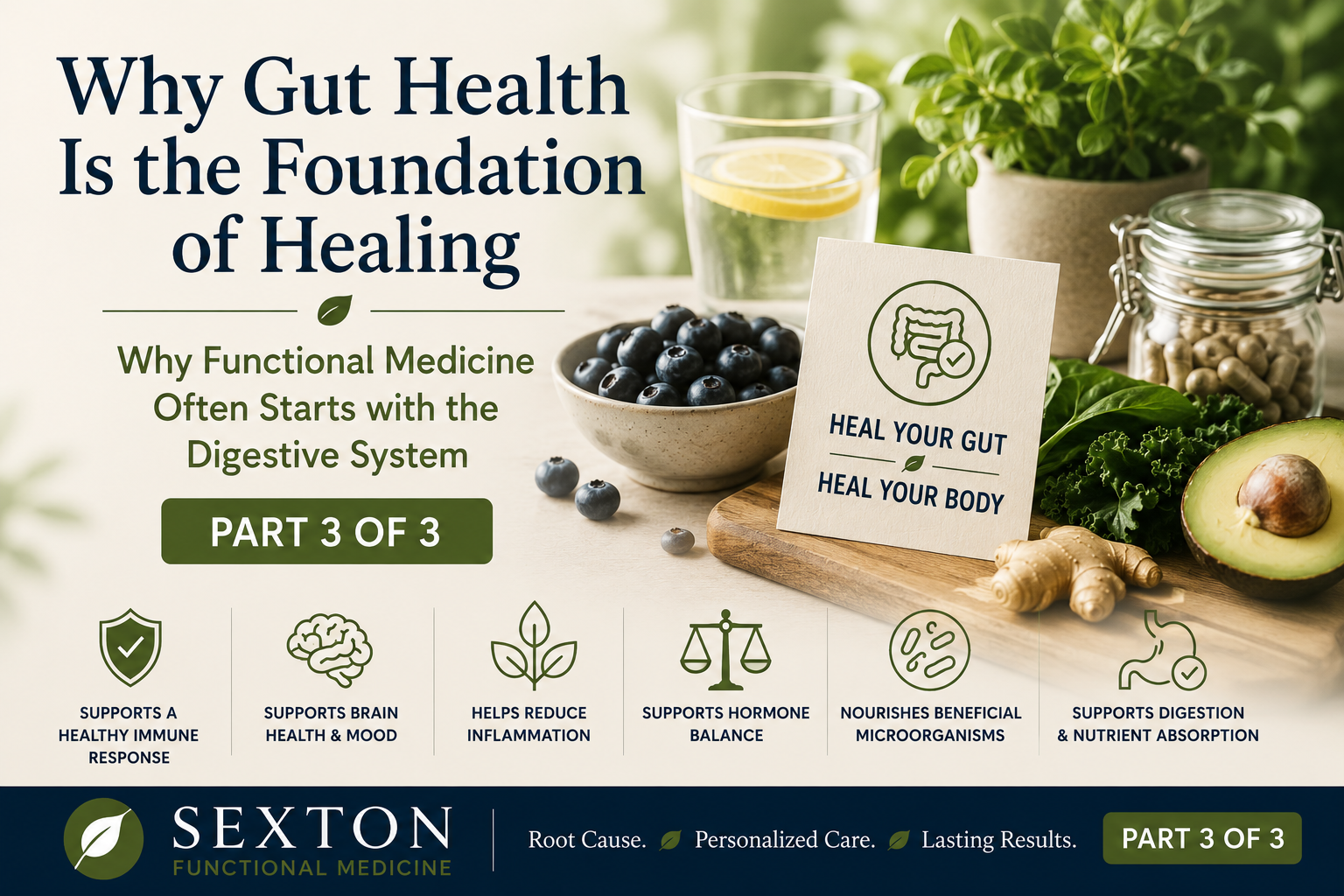
The digestive tract is one of the body’s most important communication centers. It influences nutrient absorption, immune regulation, inflammation, hormone balance, brain function, metabolism, and countless other physiological processes.
That does not mean every disease originates in the gut.
However, when digestive dysfunction is present, it often becomes much more difficult to successfully address problems elsewhere in the body.
Whether someone is struggling with chronic inflammation, Hashimoto’s thyroiditis, fatigue, metabolic dysfunction, autoimmune disease, persistent digestive symptoms, or unexplained health concerns, evaluating the health of the digestive system frequently provides valuable answers.
This is why gut health is so often the starting point in functional medicine.
Rather than chasing symptoms one at a time, functional medicine seeks to understand how the body’s systems interact and where the true obstacles to healing exist. By restoring healthy digestion, supporting the intestinal barrier, balancing the microbiome, reducing unnecessary inflammation, and optimizing nutrient absorption, we create an environment in which the body is better equipped to heal itself.
Healing is rarely about finding one magic supplement or one perfect diet.
More often, it begins by rebuilding the body’s foundation.
And for many people, that foundation starts with the gut.
This article by Dr. Clint Sexton and Sexton Functional Medicine is for educational purposes only and is not a substitute for professional medical advice, diagnosis, or treatment. Always consult a qualified healthcare provider regarding your individual health concerns. Reading this article does not establish a doctor–patient relationship.