

If you’re looking to take control of your thyroid health, understanding your TSH (Thyroid Stimulating Hormone) levels is an essential first step. Whether you’re dealing with symptoms or just want to know more about your thyroid function, TSH testing can provide critical insights into how your thyroid is working. This blog will walk you through the basics of TSH, its role in regulating thyroid hormones, and what high or low levels could mean for your health. Ready to get a clearer picture of your thyroid? Order your at-home TSH test today and take an active step toward better health and well-being.
Thyroid Gland Lab Test
What is TSH? What does it do? Why do doctors always test for it? How can you improve your test result?
Let’s break it down and empower you with the knowledge to better understand your thyroid and make informed decisions about your health.
Thyroid health is a key part of your overall well-being, yet understanding thyroid blood tests can feel overwhelming. Among these tests, the TSH (Thyroid Stimulating Hormone) test often raises questions like, What do my results mean? Is my thyroid working properly?
If you’ve ever wondered about your thyroid function or how it connects to your energy levels, metabolism, and more, you’re in the right place. This article simplifies the complex world of thyroid testing, focusing on what TSH levels reveal about your health and how they interact with other thyroid hormones like T4 and T3.
Understanding your blood tests can be confusing. There is a lot of information about what is “normal” and “healthy.” This confusion is common, especially with thyroid blood tests. Among these tests, the TSH test is often the least understood.
Common Questions About TSH
You may have asked yourself:
- Is my TSH in the optimal range?
- What does it mean if my TSH is high?
- Why is my TSH low?
- How do I improve my TSH level?
- Do I need thyroid medication?
If any of this sounds familiar, then keep reading. Let’s simplify the complex world of thyroid blood tests, focusing on TSH.
What You Will Gain:
- An understanding of what your TSH lab results mean.
- What role TSH plays in your thyroid health.
- What affects your TSH levels.
- Confidence and knowledge to have meaningful conversations with your doctor about your TSH and thyroid hormone levels.
What is TSH?
 Thyrotropin, commonly known as TSH (Thyroid-Stimulating Hormone), plays a crucial role in regulating the function of your thyroid. Produced by the pituitary gland, TSH stimulates the thyroid to produce essential hormones like T4 (Thyroxine) and T3 (Triiodothyronine), which are vital for controlling metabolism, energy levels, and overall bodily functions. This article will give you a clear understanding of what TSH is, how it relates to your thyroid health, and why measuring your TSH levels is an important step in assessing your thyroid function. While this is not an exhaustive guide, it offers valuable insights that will help you better understand your thyroid test results and how TSH impacts your well-being. I hope you find this information useful in your journey to better health.
Blood Lab TSH: How It Works
The pituitary gland produces Thyroid Stimulating Hormone (TSH), which signals the thyroid to produce essential hormones. Any changes to the pituitary can impact TSH levels, which then affect the thyroid’s hormone production.
It All Starts with TSH
Your pituitary gland, located in your head, produces a hormone called Thyroid Stimulating Hormone (TSH). This hormone stimulates your thyroid gland to make thyroid hormones.
Understanding Your Pituitary Gland
- The pituitary gland is in your head.
- The thyroid gland is at the front of your neck.
- TSH travels through your bloodstream to the thyroid gland and tells it to make thyroid hormones.
Your pituitary gland does more than just regulate thyroid hormone production. Anything that affects your pituitary can alter your TSH levels. This, in turn, affects your thyroid hormone levels.
TSH Determines T4 Levels
Under healthy conditions:
- When T4 levels get low, the pituitary gland senses this and makes more TSH.
- The TSH travels to the thyroid gland and prompts it to produce more T4.
Conversely:
- High T4 levels cause the pituitary to reduce TSH. This leads to lower T4 levels.
Think of TSH and T4 like a seesaw:
- When levels of T4 go down, levels of TSH go up.
- When levels of T4 go up, levels of TSH go down.
The most abundant hormone produced by the thyroid is T4. All other hormones come from T4. In future articles, I will explain these hormones in more detail. For now, remember that TSH and T4 affect each other.
Note: there are several types of thyroid hormones including T4, fT4 (free T4), T3, fT3 (free T3) and rT3 (reverse T3). The most abundant hormone produced by the thyroid gland is called T4 also called thyroxine. All these hormones come from T4. In future articles I will explain each of these hormones in more detail.
What High and Low TSH Levels Mean
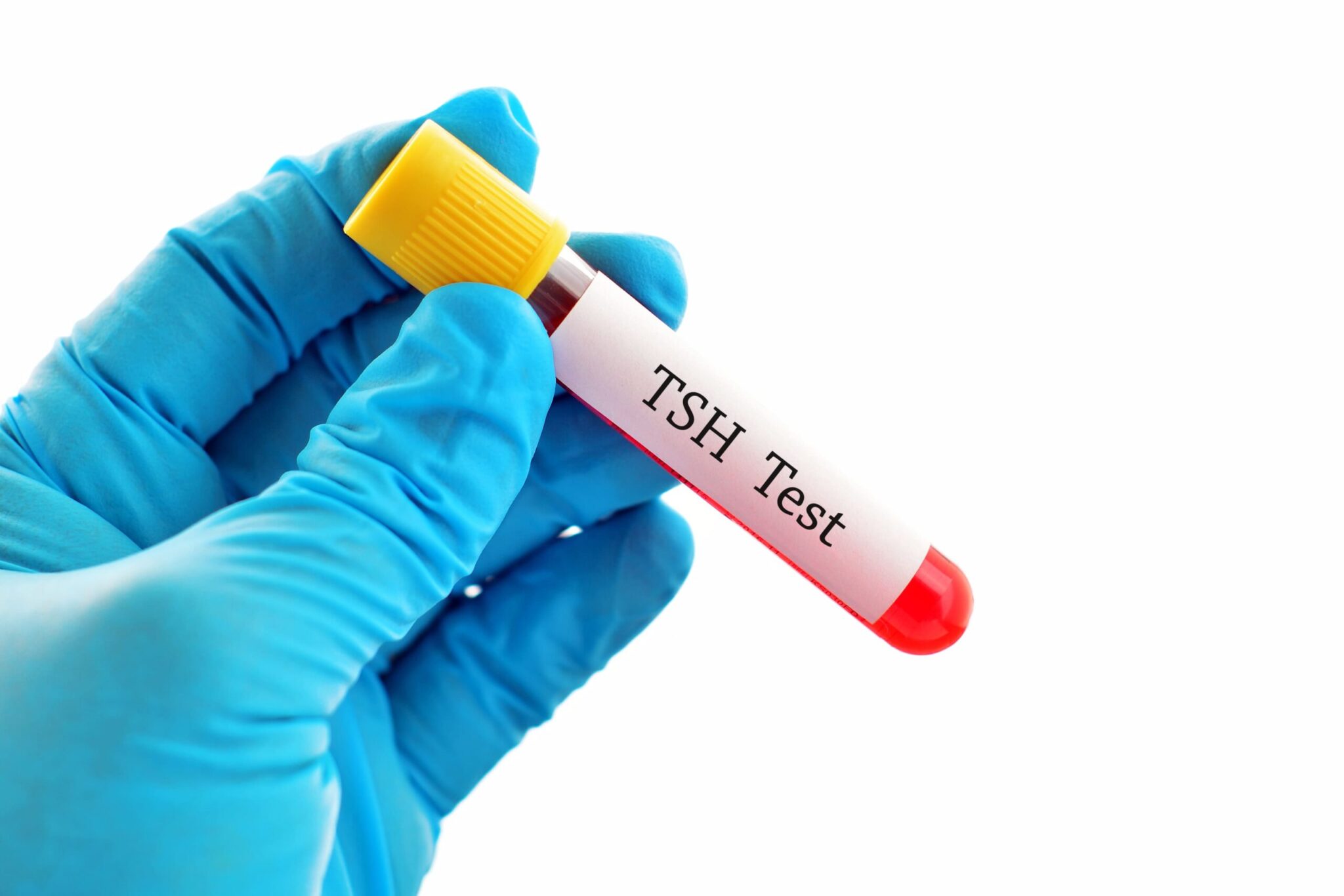 High TSH levels indicate hypothyroidism, where the thyroid struggles to produce enough T4. Low TSH levels suggest hyperthyroidism, with high T4 production. Normal TSH levels typically reflect a healthy thyroid. However, TSH should be considered alongside T4 levels for a more accurate assessment, as it indirectly measures thyroid health.
High TSH Levels
High TSH means the pituitary gland is producing a lot of TSH. This suggests that it is pushing the thyroid to make more T4, often linked to hypothyroidism (low thyroid hormone levels). If the thyroid is unhealthy, it may have an inadequate response to TSH.
Low TSH Levels
Low TSH means the pituitary has reduced TSH production because T4 levels are high. This is usually linked to hyperthyroidism (high thyroid hormone levels), often caused by a disease that disrupts T4 regulation.
Normal TSH Levels
Normal TSH levels mean the pituitary is producing normal TSH. This results in normal T4 levels. This is typical in a healthy system.
Key Concept
TSH is an indirect measure of thyroid hormone levels. The TSH levels on your blood test reflect your pituitary gland’s assessment of T4 levels. Therefore, TSH levels may not accurately represent thyroid gland function.
Some doctors rely too heavily on the “reliability and accuracy” of the pituitary gland and its production of TSH. TSH levels and T4 (or fT4) levels should be viewed independently as well as in relation to one another. This applies to many types of blood tests, not just thyroid tests.
TSH with Reflex Test to Free T4 / fT4
Reflex testing means that extra tests are done automatically. This is to better understand the initial test. If the TSH is abnormal, the lab will automatically test free T4 levels.

Causes of Abnormal TSH Levels
Possible causes of abnormal TSH levels include:
- Chronic inflammation
- Nutritional deficiencies
- Chronic stress
- Chronic infections
- Elevated cortisol hormone
- Food sensitivities
- Graves’ disease (autoimmune thyroid disease)
- Hashimoto’s disease / Hashimoto’s thyroiditis (autoimmune thyroid disease)
- Too much or too little thyroid hormone medication
Order Your TSH Test
Gaining a deeper understanding of your thyroid health through testing, like measuring TSH levels, is a vital step in improving your overall well-being. Whether you’re addressing ongoing symptoms or simply trying to get a clearer picture of your thyroid function, this knowledge can help guide your lifestyle choices and promote better health.
Taking proactive steps toward your health, such as ordering an at-home TSH test, puts you in control. When you partner with your healthcare provider and make informed decisions, you can support your thyroid function, boosting your energy and well-being, and feel empowered to live your healthiest life.
Do you have to fast for thyroid blood work? No, fasting is not required. However, avoid supplements containing biotin for three days before the test.
This article by Dr. Clint Sexton and Sexton Functional Medicine is for educational purposes only and is not a substitute for professional medical advice, diagnosis, or treatment. Always consult a qualified healthcare provider regarding your individual health concerns. Reading this article does not establish a doctor–patient relationship.