
If you’re reading this post, it’s likely that you’re looking for ways to improve how your thyroid gland is functioning or how to fix your thyroid. Perhaps your recent lab results are not within the optimal range, leaving you with unanswered questions, or you may be dealing with frustrating signs and symptoms of a sluggish thyroid, such as fatigue, weight changes, or brain fog. Whatever the case, you’re not alone, and understanding your thyroid is the first step toward reclaiming your health and vitality.
How To Fix The Thyroid Gland
Chances are, you are not going to get much help from your doctor, other than being given a prescription for thyroid medication. Most doctors don’t have any advice about how to improve thyroid function. It usually comes down to either starting medication or not starting medication. Not a lot in between.
Let’s see if we can shed some light on how your thyroid gland is supposed to work and how you can help support it.
If you want to fix your thyroid problem, you are going to need to understand why you have a problem and what you can do to fix it.
I am going to cover 3 topics you need to understand if you hope to have success:
- HOW your thyroid is supposed to work.
- WHY your thyroid isn’t working.
- WHAT you can and can’t do to fix it.
HOW is your thyroid supposed to work?
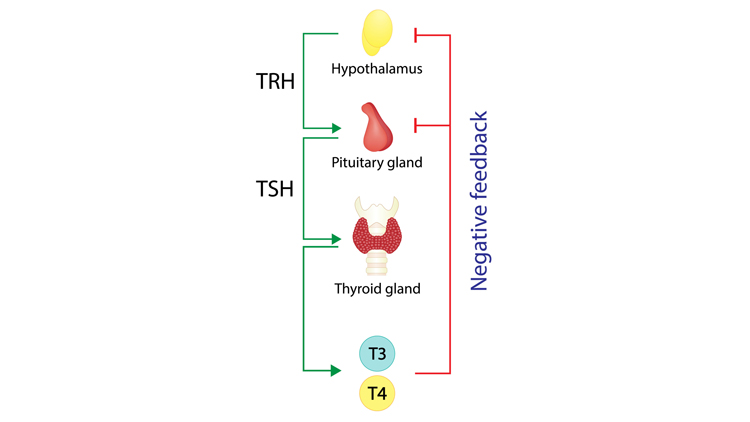
Let’s start with how your body controls the thyroid gland. We will go from the top down. Thyroid control starts in a part of your brain called the hypothalamus. If this part of your brain senses you need thyroid hormone, it sends that signal to your pituitary gland. Your pituitary gland then makes a hormone called TSH. TSH tells you thyroid gland to make more thyroid hormone; specifically, the hormone called T4. This T4 hormone is then converted to the active form of thyroid hormone called T3.
Ok, so to summarize; your brain tells a gland to make a hormone that tells your thyroid gland to make hormones. This is how your thyroid gland is supposed to work.
If there is a breakdown at any one of the following points you will experience thyroid hormone imbalances:
- Hypothalamus
- Pituitary gland
- Thyroid gland
- Conversion of T4 into T3 (this is accomplished by special enzymes called deiodinase enzymes; this occurs in several places including your liver, gut and kidneys)
Ok, so now we need to look at each of these key points and WHY they might not be working properly.
WHY is your thyroid not working?

#1 Hypothalamus: this part of your brain is a very important part of your overall body function and regulation. It does a lot more than just regulate thyroid function. It’s involved in regulating other hormones, immune system function, metabolism, sleep, mood and the autonomic nervous system (your sympathetic and parasympathetic nervous system).
It’s the link between your brain and the rest of your body. So yeah, it’s a pretty big deal.
Anything that affects your overall health will affect your hypothalamus. If you are under chronic stress, ill, inflamed, lacking nutrients or not sleeping well just to name a few, it can affect how your hypothalamus works.
Your hypothalamus makes a hormone called TRH that tells your pituitary gland to make its hormone called TSH.
On this diagram, negative feed back means as levels of T4 and T3 go higher the levels of TRH from the hypothalamus and TSH from the pituitary will go lower.
#2 Pituitary Gland: your hypothalamus sends the hormone TRH to your pituitary gland, so it makes the hormone TSH. You are probably familiar with TSH, it is the most common thyroid test performed and sometimes the ONLY test that gets performed.
If your hypothalamus makes less TRH your pituitary will make less TSH, and your thyroid gland will make less thyroid hormone. Your pituitary gland is also doing some monitoring of it own. If it senses low levels of thyroid hormones in your blood, it will make more TSH. If the thyroid hormone levels are high, it will make less TSH.
Ok, so how can the pituitary gland be the problem in thyroid dysfunction.
One of the main causes is how it is processing the conversion of thyroid hormone T4 into T3. This conversion occurs in several places in your body like your liver and kidneys but also within the pituitary gland itself. This is accomplished by what we call deiodinase enzymes. We are interested in 2 types of this enzyme called D1 and D2.
- D1: converts T4 into T3 throughout your body
- D2: converts T4 into T3 in your pituitary gland
(Side note: D3 converts your T4 into the inactive thyroid hormone called rT-3/ reverse T3).
So, if your D2 enzymes are not working properly, your pituitary gland can’t accurately regulate thyroid hormone levels properly through appropriate TSH production.
The following problems can interfere with this conversion process and lead to thyroid dysfunction and non-optimum levels of thyroid hormone:
- Chronic stress
- Inflammation
- Poor sleep
- Depression
- Dieting (especially caloric restriction or low-carbohydrate diets)
- Insulin resistance
- Obesity/ leptin resistance/ increased BMI (body mass index)
- Diabetes
- Exposure to toxins and heavy metals
Here is a little more detail on heavy metals and toxins in our food…
“Heavy metals, such as arsenic (As), cadmium (Cd), lead (Pb) and mercury (Hg) are environmental toxins that interfere with the normal functioning of the thyroid gland.”
Heavy metals interference with the TPO enzyme in the thyroid gland that makes T4 hormone.
“Bisphenol A (BPA) is one of the world’s most commonly used chemical in food packaging, food can lining, toys, tubes, cosmetics, etc. It can easily diffuse into food or beverages. BPA inhibits thyroid hormone synthesis in several ways: it reduces thyroid iodide intake and TPO activity and alters gene expression for proteins involved in thyroid hormone synthesis. BPA is an antagonist of thyroid hormone receptors.”
Just being overweight can affect how your thyroid gland works and your thyroid test results. Obesity can cause elevated TSH and T3 levels. But obesity will result in fewer receptors for T3, so it will be less effective.
“It has also been speculated that the increase in TSH levels in obesity is a consequence of hormone resistance. This hypothesis could explain why both TSH and T3 levels are increased in obesity. Since T3 receptors are reduced in obesity.”
“Adipose/fat tissue secretes the hormone leptin which is also involved in the production of hypothalamic TRH (and consequently the production of pituitary TSH). There is a positive correlation between leptin levels and BMI, so this could be a good explanation for why TSH levels increase with increasing BMI/ obesity.”
#3 Thyroid gland: the problem might be found in the thyroid itself. One of the common causes is thyroid damage from Hashimoto’s disease. This is a disease where the immune system attacks the thyroid gland. In some cases, damage may be so extensive that thyroid medication is the only solution. It all depends on how much functioning gland is still intact.
As you can see, there are many possible reasons WHY your thyroid gland is not working properly. Hypothalamus, pituitary gland, thyroid gland and deiodinase activity.
So, what can you do about it?
WHAT can you do to fix it?
There are 3 major areas to focus on if you want to improve thyroid function.
You need to create an environment in your body which permits the hypothalamus, pituitary gland, thyroid gland and the deiodinase enzymes to work the way they are supposed to.
This is why we must consider the following:
- Diet
- Nutritional supplements
- Lifestyle
Diet
There are not a lot of studies that prove which type of diet is best for thyroid health, but in my experience with thousands of patients, a low-inflammation diet is a great place to start. The foods we eat can be a significant source of inflammation which is a byproduct of our immune system response to those foods.
“The interdependence between thyroid hormones, namely, thyroxine T4 and triiodothyronine T3, and immune system is nowadays well-recognized.”
Here are some of the top foods to consider eliminating or reducing in your diet:
- Gluten
- Dairy (foods made from milk)
- Eggs
- Soy
Eliminating food allergies and sensitivities is very important if you are also suffering from Hashimoto’s disease.
Everyone’s immune system is different, but these are some of the most common immune system-triggering foods.
Blood sugar / Insulin Resistance
The other main factor to address with diet would be elevated blood sugar and or insulin resistance. You want to lower your intake of carbohydrates and sugars. Replacing high carbohydrate foods with healthy fats and proteins can be very helpful.
Nutritional Supplements
Your body requires certain nutrients to make thyroid hormone. Some are more important to be aware of than others. For example, you need to eat protein so that have the amino acid (protein building block) tyrosine. You also need to make sure you have iodine, selenium, zinc and copper in your diet. Having low iron or anemia can also interfere with thyroid hormone production. You could take a dietary supplement that has these nutrients or do blood tests to confirm deficiency.
Key nutrients:
- Tyrosine (amino acid from protein)
- Iodine
- Selenium
- Zinc
- Iron
- Copper
- Vitamin D
NOTE: if you do not have a deficiency in one of these nutrients, taking it will not raise your levels of thyroid hormone. They will ONLY be helpful if you have a deficiency.
“Many micronutrients have been shown to have an effect on TSH and thyroid hormone levels. Among vitamins, vitamin D has been the most studied. Moreover, many trace minerals have been shown to have an effect on thyroid function, including selenium, zinc, iron, copper and iodine.”
Lifestyle Choices
This is a huge category because there are so many things you could do. So let’s just take a step back and think about the things that would help your body work better. There are 3 key areas to address:
- Exercise
- Sleep
- Stress management
If you are not getting regular exercise, begin with activities you can safely perform. Sleep can be a bit more challenging for some people, but I have observed many people achieve better sleep when they start making some of the other changes to their diet, nutrition and physical activity. Remember, your hypothalamus plays a major role in our sleep.
“The hypothalamus, a peanut-sized structure deep inside the brain, contains groups of nerve cells that act as control centers affecting sleep and wakefulness.”
As for stress management, if you eat better, get the nutrients you need, start getting some physical exercise and begin sleeping better, you will also be able to handle stress better.
Other stress-management tools like meditation and mindfulness can also be very helpful. Getting on a health-conscious routine can help bring a sense of order to your life and make the stress we encounter in life more manageable.
Take Charge of Your Thyroid Health
It’s time to stop waiting around for things to get better on their own… or get worse. It’s important to know what you are trying to change and if you are making progress. This is why it’s important to get the information that you get from your blood tests.
You need to know what your levels are, so you know if you are addressing the right things. In addition to a comprehensive thyroid panel, would want to know if you have problems with blood sugar, insulin, inflammation or key nutrient deficiencies.
Your thyroid health plays a crucial role in your overall well-being, and while the causes of dysfunction can be complex, the solutions are often straightforward and within your control. By addressing key aspects of your diet, supplementing with essential nutrients, and adopting a lifestyle that includes exercise, stress management, and better sleep, you can support your body to function as it should.
Start small. Replace inflammation-triggering foods, incorporate nutrient-rich meals, and dedicate time to self-care. Remember, consistency is key. The steps you take today can transform your thyroid health and, in turn, your life.
Contact us now and take back control of your health. Your journey to a healthier thyroid starts today.
This article by Dr. Clint Sexton and Sexton Functional Medicine is for educational purposes only and is not a substitute for professional medical advice, diagnosis, or treatment. Always consult a qualified healthcare provider regarding your individual health concerns. Reading this article does not establish a doctor–patient relationship.