
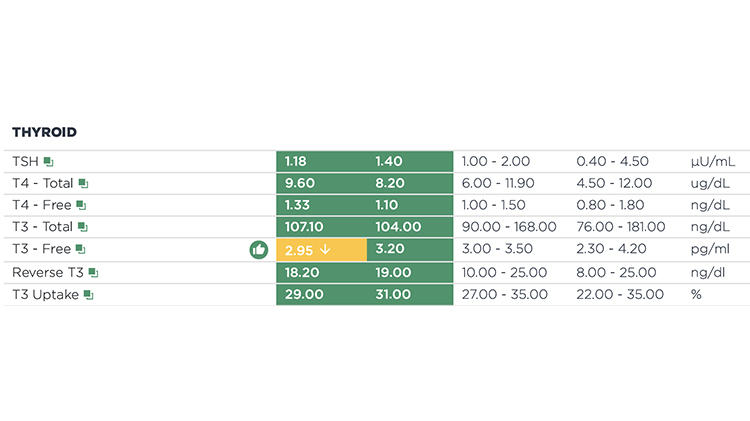
Blood tests are powerful tools that offer a glimpse into your overall health. But are you looking at the full picture? Traditional lab values focus on identifying disease, while functional blood test values reveal a proactive approach. This approach prioritizes optimal health over the mere absence of illness.
By understanding these functional ranges, you can take charge of your well-being and detect potential issues before they escalate into chronic conditions and disease.
More healthcare professionals are advocating for functional blood test values instead of standard values.
Wouldn’t you want to identify the early signs of dysfunction that lead to disease BEFORE the disease occurs?
Functional Blood Test Labs vs Standard Blood Test Labs
Functional blood tests go beyond standard labs by focusing on optimal wellness rather than just detecting diseases. They use narrower ranges to identify early imbalances and provide personalized insights based on factors like age, lifestyle, and genetics. This approach promotes preventive care, helping address potential risks before they become serious, while offering a holistic view of health. Functional testing empowers individuals to optimize their well-being, refining areas like thyroid function, blood glucose, and vitamin D levels for a healthier, more vibrant life.
Understanding Standard Blood Test Lab Values
Standard blood test lab values are derived from population averages and represent a broad range considered “normal.” These values are primarily used to diagnose diseases by identifying significant deviations from the norm. While effective for detecting overt pathologies, standard values may overlook subtle imbalances that could affect your well-being.
What Are Functional Blood Test Lab Values?
Functional blood test lab values emphasize optimal health. Instead of relying solely on averages, functional values consider the ideal ranges for maintaining wellness and preventing disease. These values are often narrower and tailored to identify early signs of dysfunction.

Benefits of Using Functional Blood Values
1. Early Detection
- Detect health issues at an earlier stage.
- Highlight subclinical imbalances that standard values might miss.
- Allow for timely interventions to prevent serious conditions.
2. Personalized Approach
Functional blood test lab values offer a more personalized approach to healthcare. They consider:
- Age
- Sex
- Lifestyle
- Genetic predispositions
3. Holistic View
Functional lab values promote a holistic view of health. They encourage looking beyond a disease diagnosis and considering the overall well-being of the individual. This approach can lead to:
- More comprehensive health-restoration plans
- Lifestyle modifications that address root causes of health imbalances
4. Preventive Care
By identifying potential health issues before they become symptomatic, functional blood test lab values enhance preventive care. Early interventions can:
- Reduce the risk of chronic diseases
- Improve long-term health outcomes
- Enhance quality of life
5. Empowerment
People who undergo testing with functional lab values often feel more empowered about their health. These tests provide detailed information about:
- Current health status
- Areas needing improvement
Functional vs Standard Blood Test Lab Values
Standard blood test lab values use broad reference ranges based on population averages. Functional values use narrower, optimal ranges aimed at identifying suboptimal health states. For example:
- Standard range for fasting blood glucose: 70-99 mg/dL
- Functional range for fasting blood glucose: 75-85 mg/dL
Example of Functional Range for Fasting Glucose

According to studies, a healthy fasting blood sugar is 83 mg/dL or less. Many healthy people have fasting blood sugar in the mid-to-high 70s.
Traditional criteria for diagnosing diabetes do not identify prediabetes until fasting glucose reaches 100-125 mg/dL. Diabetes is diagnosed when fasting glucose is above 126 mg/dL.
Example of Standard Fasting Glucose Values

Most doctors say that anything under 100 mg/dL is normal. However, if your glucose is in the mid-90s, do you really want to be that close to prediabetes?
Your test results can be viewed through different lenses. If you only want to diagnose prediabetes or diabetes, use the Standard Values. If you want to identify risks that may be forming, use the Functional Values.
In one study, people with fasting blood glucose levels above 95 had more than 3 times the risk of developing future diabetes than those with levels below 90. Another study showed progressively increasing risk of heart disease in men with fasting blood glucose levels above 85 mg/dL.
Your results are on a health or disease spectrum. You need to understand that the result of your blood test falls within the range of function. You don’t want to be too low or too high. If your value is getting too low, health decreases. If your value is too high, health also decreases.
It is not just a “yes-disease” or “no-disease.” It is about where you fall in the spectrum of function.
Interpretation of Results
Standard values focus on identifying diseases that fall outside the normal range. Functional values emphasize trends and patterns within the optimal range. This provides a more detailed picture of overall health.
It should be noted that not everyone agrees on what the functional ranges should be. The fact is nobody knows the absolute ideal values. We are learning more about how the body works every day.
Application of Analysis – Standard vs Functional
Standard lab values are widely used in conventional medicine for diagnosing diseases. Functional values are often utilized to optimize health and prevent disease through personalized care.
Example 1: Thyroid Function
Someone with standard lab values for thyroid function may be considered healthy if their thyroid-stimulating hormone (TSH) level is within the broad standard range of 0.4-4.50 mIU/L. However, functional lab values might consider a narrower optimal range of 1.0-2.0 mIU/L.

Example 2: Vitamin D Levels
Standard lab values for vitamin D may range from 20-50 ng/mL. Functional practitioners might aim for an optimal range of 40-60 ng/mL. A patient with a vitamin D level of 25 ng/mL might be considered deficient from a functional perspective.
Order Your Functional Blood Test Labs
Functional blood test lab values offer a valuable alternative to standard values. They provide a more detailed and personalized assessment of health. By emphasizing optimal ranges and early detection of imbalances, functional values can enhance preventive care and empower individuals to take charge of their health. Order your functional blood test labs today.
Your health is more than just a set of numbers. It requires a deeper understanding of what is heathy and what is not.
Start viewing your blood test results through the lens of functional health and take the next step toward a healthier, more vibrant life today!
This article by Dr. Clint Sexton and Sexton Functional Medicine is for educational purposes only and is not a substitute for professional medical advice, diagnosis, or treatment. Always consult a qualified healthcare provider regarding your individual health concerns. Reading this article does not establish a doctor–patient relationship.