
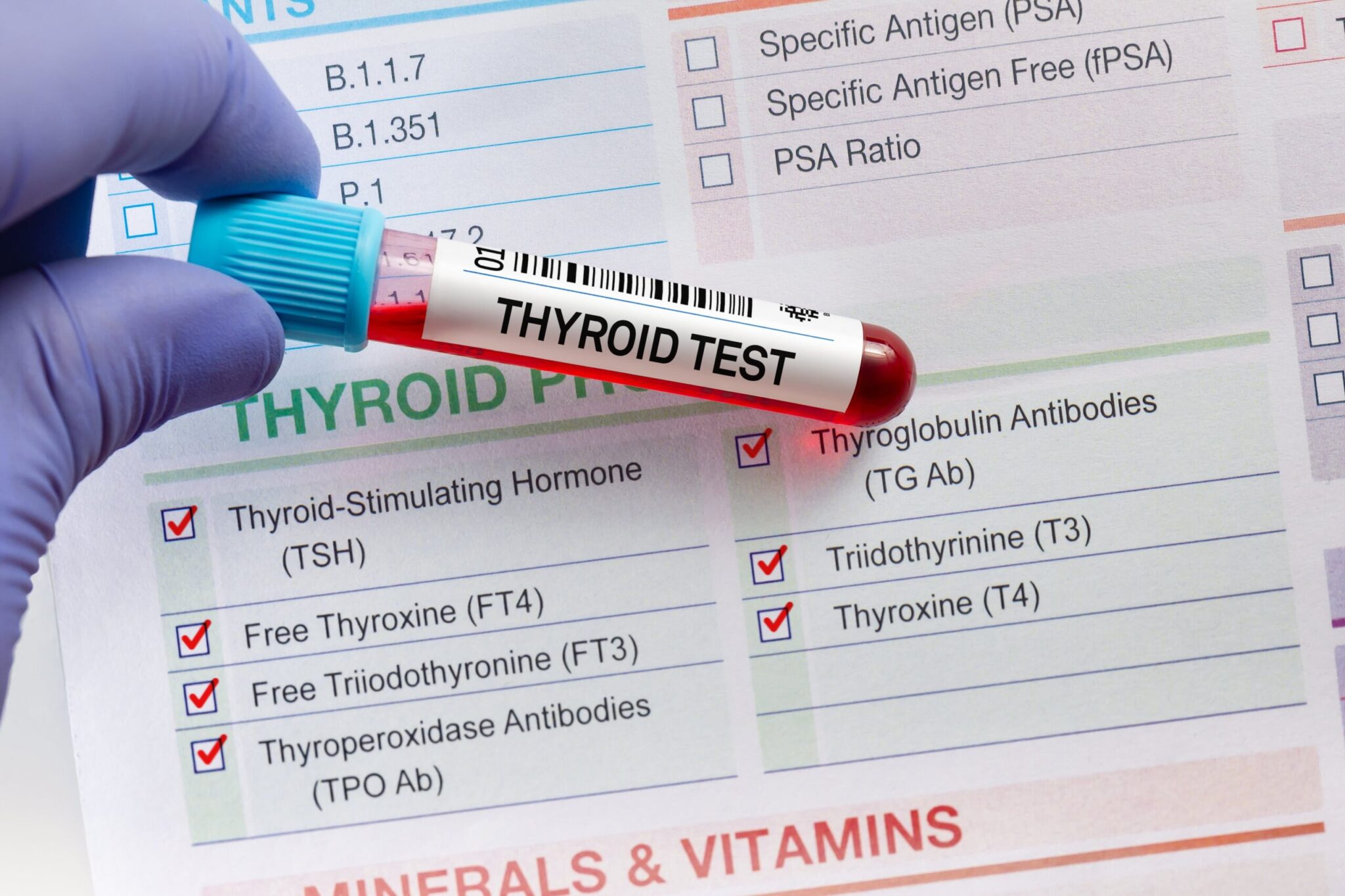
Understanding thyroid and metabolism health is crucial for tackling unexplained health issues. Dr. Sexton’s Comprehensive Thyroid Health and Metabolism Blood Test goes beyond standard testing, offering a deeper look at key thyroid functions and other factors affecting your health. This test covers 8 thyroid markers, inflammation, blood sugar, stress hormones, and nutrient balance to identify whether thyroid issues or other conditions are the cause of your symptoms. With a complete metabolic picture, the test helps pinpoint the root cause of your health concerns, allowing for tailored self-care and more effective treatment. Take control of your well-being today and gain vital insights into your health. Learn more about thyroid health and metabolism blood test now.
Discover the Root Cause of Your Thyroid and Metabolism Problem…
In a world where unexplained health issues are all too common, understanding your thyroid health and metabolism is key. Discover a breakthrough in wellness with Dr. Sexton’s Comprehensive Thyroid Health and Metabolism Blood Test.
Without proper testing, you are guessing…you don’t know what is happening in your body. You can test or you can guess.
This innovative panel goes beyond standard testing—it scrutinizes 8 essential thyroid tests while also evaluating vital markers of inflammation, blood sugar, stress hormones, and nutrient balance. Any of which can have a negative impact on your thyroid health.
By offering a complete picture of your body’s metabolism, it empowers you to differentiate between thyroid issues and the conditions that mimic them, setting the stage for tailored, effective selfcare.
Thyroid health is complex and depends on the function of other systems in the body. It is important to test thyroid function as well as the other variables that can interfere with the function of thyroid hormones and metabolism.
You must find out if your health concerns are caused by poor thyroid health or some other health issue that mimics poor thyroid health.
This is why I have created the Thyroid Health and Metabolism blood test panel. It covers the key tests for the thyroid as well as many common problems that can look and feel like a thyroid problem but are not caused by a thyroid problem.
You must test 6 key thyroid areas:
- Is there is problem with the thyroid hormone production (T4)
- Is there a problem with thyroid hormone conversion (T3)
- Is there enough biologically active T4 thyroid hormone (free T4)
- Is there enough biologically active T3 thyroid hormone (fee T3)
- Is there a healthy level of transport proteins for thyroid hormone (T3 Uptake)
- Is there a strong signal from the pituitary gland to stimulate thyroid hormone production (TSH)
- Is the thyroid gland being attacked by the immune system (TPO antibodies)
- Like TPO, is there a different antibody attacking the thyroid (Thyroglobulin antibodies)
Once you identify a problem with one of the tests above, you will need more information about the environment of your body so you can help support it effectively.
Other key areas to be tested include:
- Inflammation
- Blood sugar and insulin levels
- Stress hormones
- Key nutrients related to inflammation and metabolism
- Red blood cells for oxygen transport and metabolism
- White blood cells; for immune function
- Liver and kidney function for healthy detoxification
- Etc.
The main point is that you must do enough testing to rule in or rule out a thyroid problem as well as determine if there are other health issues that are interfering with optimal thyroid function and healthy metabolism.
Below is a simple, plain‐language definition for each of the blood tests listed in Dr Sexton’s Thyroid Health and Metabolism Panel. Each test and a simplified and basic explanation of each test is provided. There are many health issues and medications that can cause abnormal test results. I have provided this list of tests and a basic explanation for each so you can get a sense of what is being tested and why.
49 Thyroid and Metabolism Tests
- TSH (Thyroid Stimulating Hormone):
A hormone from the pituitary gland that signals the thyroid to produce its hormones (T4 and T3). - T4 (Thyroxine):
A hormone made by the thyroid that helps regulate metabolism, energy production, and overall growth. - Free T4:
The portion of T4 that is not bound to proteins in the blood, so it is immediately available for use by the body. - T3 (Triiodothyronine):
A more active thyroid hormone than T4 that plays a key role in controlling metabolism, energy production, growth of tissues and body temperature. - Free T3:
The unbound part of T3 hormone that is free to interact with cells and exert its effects. - T3 Uptake:
A test that estimates how many binding sites on thyroid-binding proteins are available. One of these binding proteins is albumin (see below). This is influenced by inflammation, pregnancy, hormone replacement therapy (HRT), oral contraceptives, acute stress and liver disease. - TPO (Thyroid Peroxidase) Antibody:
An antibody that targets thyroid peroxidase, an enzyme in the thyroid required to make thyroid hormones. Its presence can indicate autoimmune thyroid disease like Hashimoto’s or Graves’ disease. - Thyroglobulin Antibody:
An antibody against thyroglobulin, a protein produced by the thyroid and used to make thyroid hormones. Their presence suggests an autoimmune condition affecting the thyroid such as Hashimoto’s disease or Graves’ disease. - C-Reactive Protein (high sensitivity):
A test for inflammation in the body; the high sensitivity version detects even low levels of inflammation. (See Sedimentation Rate and Ferritin below) - Sedimentation Rate (ESR):
A measure of how quickly red blood cells settle in a test tube; faster rates indicate inflammation in the body. This is another method of testing inflammation in the body. - CBC with Differential and Platelets:
A complete blood count that reviews the numbers and types of blood cells (red cells, white cells, and platelets) to help diagnose various conditions. Red blood cells depend on healthy levels of iron. Red blood cells carry oxygen to the cells of your body so they can make energy. The white blood cells are your immune system cells. - Insulin (fasting):
The level of insulin in the blood after fasting, used to assess how well your body manages blood sugar. Fasting insulin and fasting glucose values can be used to calculate and determine the presence of insulin resistance. High levels of insulin may be seen with insulin resistance, prediabetes and type 2 diabetes. Low levels of insulin may be seen with advanced type II diabetes, type I diabetes and disease of the pancreas. - Serum Iron: This is the measure of iron in your blood.
- TIBC (Total Iron-Binding Capacity):
This test measures how well iron is being carried by proteins in your blood. it is a measurement of all proteins available for binding mobile iron. (see Ferritin) - Ferritin:
A protein that stores iron in your body; its level indicates how much iron is stored. Levels may also be elevated with inflammation in the body. Iron levels in the blood can fluctuate, ferritin reflects iron storage in the body. Approximately 70% of iron in the body is found in your red blood cells and the other 30% is stored in the form of ferritin. - Cortisol:
A hormone produced by the adrenal glands that helps regulate stress, metabolism, and inflammation. Cortisol levels are typically increased during periods of stress which can be physical or emotional. Cortisol is also involved in regulating healthy blood sugar levels and preventing low blood sugar/ hypoglycemia. - DHEA-Sulfate:
An androgen (androgen refers to male…DHEA and testosterone are androgens) hormone produced by the adrenal glands that serves as a precursor for other sex hormones. DHEA, like cortisol plays a role in the stress response. Elevated levels of DHEA are often seen in women with insulin resistance and or PCOS (Polycystic Ovary Syndrome). DHEA is important for women after menopause because it can be converted into progesterone, estrogen and testosterone. As the ovaries produce less hormones, the adrenal glands help maintain healthy hormone levels. - Magnesium:
An essential mineral that supports nerve function, muscle contraction, and bone health. It is also important for thyroid health and metabolism. Low levels may be associated with adrenal gland/stress, poor absorption in the gut or inflammation. - GGT (Gamma-Glutamyl Transferase):
An enzyme used to assess liver function; high levels can signal liver damage. It is the most sensitive liver enzyme test for identifying gallbladder related issues. The liver is a primary organ of detoxification but also with the kidneys where T4 is converted into the active form of thyroid hormone (T3). - Alkaline Phosphatase (ALP):
An enzyme found in several tissues, especially the liver, bones and intestines; abnormal levels can indicate inflammation or tissue damage in these areas. Low levels may indicate a zinc deficiency. - Aspartate Aminotransferase (AST) / Serum Glutamate-Oxaloacetate Transaminase (SGOT):
An enzyme found in the liver, muscle, heart, kidneys and lungs; increased levels often suggest tissue damage. The liver and kidneys are both involved in the conversion of T4 hormone into active T3 hormone. Low levels may indicate low B-vitamin levels. - Alanine Aminotransferase (ALT) / Serum Glutamate-Pyruvate Transaminase (SGPT):
An enzyme mainly in the liver; high levels typically indicate liver inflammation or injury. Lower levels of this enzyme are also found in muscle, heart and kidneys. High levels may be seen in liver damage or fatty liver commonly seen in insulin resistance. - Vitamin D:
A fat-soluble vitamin essential for bone health, calcium absorption and immune function. - Vitamin B12:
A vitamin crucial for nerve function, cell metabolism, DNA production and red blood cell formation. B12 is necessary for the conversion of the inactive form of folate into its active form. Healthy levels of stomach acid are needed for proper absorption of B12. Antacids can interfere with B12 absorption. Low levels can lead to anemia and neurological issues. - Vitamin B9/Folate (Folic Acid):
A vitamin important for cell growth and metabolism, with low levels potentially affecting red blood cell formation and causing anemia. - Lipid Panel with Cholesterol/HDL Ratio: A group of tests that measure different types of fats in your blood, with the ratio helping assess your risk of heart disease and metabolic disease. Poor thyroid function, prediabetes and insulin resistance are common causes of unhealthy cholesterol tests. This includes the following 6 tests:
- Total cholesterol
- Triglycerides
- HDL cholesterol and LDL
- VLDL cholesterol
- Total cholesterol/HDL cholesterol ratio
- Uric Acid:
A waste product from the breakdown of purines; high levels can lead to gout or signal kidney issues. Stress can increase uric acid levels as can alcohol, vitamin C, caffeine and aspirin. - Hemoglobin A1c:
A test that reflects your average blood sugar levels over the past 2–3 months. This is different than the glucose test which measures the level of glucose at the time the blood draw only. Accurate results depend on healthy red blood cells. - LDH (Lactate Dehydrogenase):
An enzyme found throughout the body including the heart, lungs, kidneys, muscle, liver and pancreas. High levels can indicate tissue damage or disease. Levels may be elevated with vitamin B12 or folate deficiency or inflammation in the body. Low levels may be seen reactive hypoglycemia (poor blood sugar regulation). - Glucose:
The main sugar in your blood, measured to evaluate energy balance, calculate insulin resistance, prediabetes and diagnose diabetes. - BUN (Blood Urea Nitrogen):
A measure of the nitrogen in your blood that comes from urea—a waste product of protein metabolism—and an indicator of kidney function. - Creatinine:
A waste product from normal muscle activity, used to gauge how well your kidneys are filtering waste. Elevated levels can indicate kidney disease, dehydration, high-protein diet or recent physical (muscular) exertion. - eGFR (Estimated Glomerular Filtration Rate):
A calculation based on creatinine and other factors that estimates how efficiently your kidneys filter blood. - BUN/Creatine Ratio:
A comparison of BUN to creatinine levels that can help detect kidney problems. - Sodium:
An electrolyte that helps control water balance and is crucial for nerve and muscle function. Elevated levels may be seen with poor adrenal gland function, dehydration or excessive sodium consumption. - Potassium:
An electrolyte key to cell function, nerve signals, and muscle contractions, including the heartbeat. - Chloride:
An electrolyte that works with sodium to maintain proper fluid balance and is important for digestion. Higher levels may be seen with increased stress/adrenal gland function or increased acidity of the body. Lower levels are sometimes seen with low levels of stomach acid. Chloride is used to make the acid of the stomach (hydrochloric acid/ HCl). - Calcium:
A mineral necessary for strong bones and teeth, as well as proper muscle and nerve function. High levels may be seen with parathyroid gland disease or hypothyroidism. Excess vitamin D can also cause elevated calcium levels. Low levels may be due to low albumin levels (see albumin) low calcium intake or poor absorption. Antacids or low stomach acid can decrease calcium absorption. - Carbon Dioxide (total): Carbon dioxide is an odorless, colorless gas. It is a waste product from metabolism, the process your body uses to make energy from food you eat.
- Protein (Total):
A measure of all the proteins in your blood, including albumin and globulins, which reflects overall nutritional and health status. (see Albumin and Globulin below) - Albumin:
The main protein made by the liver that helps maintain fluid balance and transports various substances in the blood. Approximately 40% of your calcium is bound to and transported by albumin. Albumin is also one of the transport proteins for thyroid hormone in the bloodstream. High levels may been seen in dehydration or low thyroid function. - Globulin (Total):
A group of proteins that play roles in immune function, blood clotting, and other vital processes. - A/G Ratio (Albumin/Globulin Ratio):
A comparison of albumin to globulin levels that helps assess liver function, kidney function, and nutritional status. - Bilirubin (Total):
A byproduct of red blood cell breakdown that is processed by the liver; abnormal levels may indicate liver, bile duct problems or increased destruction of red blood cells.
This Thyroid and Metabolism panel includes 49 tests (the 43 listed and the 6 tests on the lipid panel).
These tests provide a tremendous amount of essential information about the internal environment of your body.
Order Your Thyroid Test to Understand your Metabolism Now
Now is the time to take control of your thyroid health, metabolism and well-being. Order your comprehensive thyroid and metabolism assessment today and step confidently toward a future of balanced energy and optimal health. Don’t wait—your journey to health and vitality starts with a single test.
You won’t know until you test!
This article by Dr. Clint Sexton and Sexton Functional Medicine is for educational purposes only and is not a substitute for professional medical advice, diagnosis, or treatment. Always consult a qualified healthcare provider regarding your individual health concerns. Reading this article does not establish a doctor–patient relationship.