
What’s got you thinking about your thyroid gland?
Are you constantly feeling fatigued, struggling with brain fog, or noticing changes in your weight, hair, or mood? The answer may lie in your thyroid health and mitochondrial function—the two key systems responsible for energy production in your body.
Your thyroid controls metabolism, while your mitochondria generate the fuel your cells need to function. Without the right nutrients, these systems slow down, leaving your cells energy straved. In this article, we’ll explore the essential vitamins and minerals that power your thyroid, support mitochondrial function, and help you reclaim your energy, health and vitality.
What are you experiencing that has you wondering if your thyroid gland is working as well as it should be?
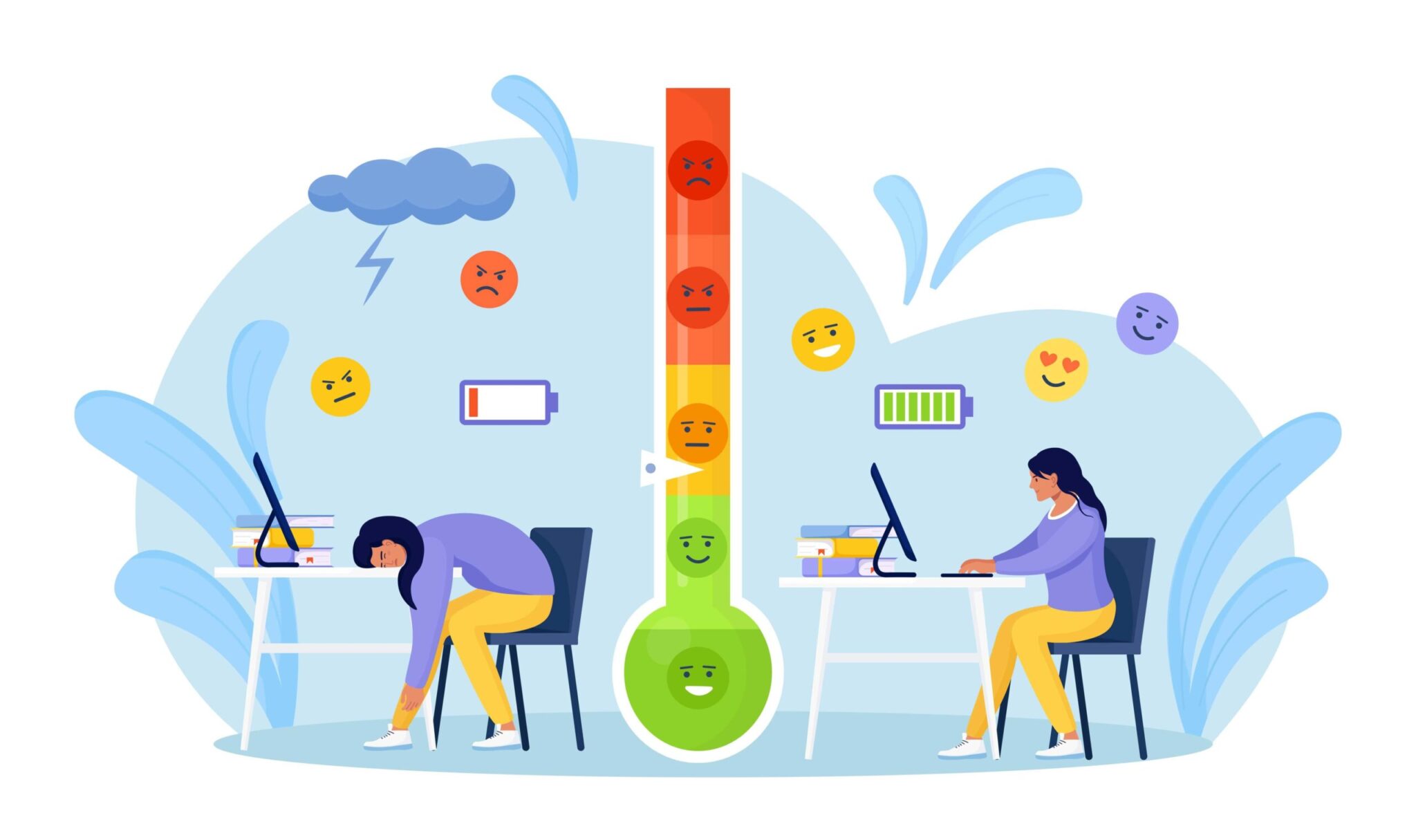
In a nutshell your thyroid is the organ responsible for energy production in your body. All thyroid-related symptoms…weight gain, fatigue, brain-fog, depression, constipation, hair, skin and nail health…it all goes back to energy production in your cells.
Your thyroid gland is responsible for your energy levels, and it depends on certain nutrients to accomplish this. Which vitamins and minerals make a difference in how your body makes energy? I’m going explain which nutrients your thyroid needs and how energy is produced in your body.
Get More Energy!
We have a word that encompasses the concept of energy production in your body, and it’s called metabolism. Metabolism is the process of taking the food you eat and converting it into a form of energy your cells can use.
The food you eat must be converted into a chemical called ATP. Adenosine triphosphate (ATP) is what your body uses as energy.
Your thyroid gland makes hormones, especially T3 hormone, that is essential to produce ATP. Deep inside your cells are small structures called mitochondria, and they make your ATP. T3 hormone influences how many mitochondria you have and how much energy they can produce. T3 hormone stimulates the production of various mitochondrial enzymes and proteins involved in the production of ATP.
The hormone you need is T3 and it acts on mitochondria inside your cells to produce ATP.
Any nutrient deficiency that affects the production of T3 or the health of your mitochondria will have a direct impact on your energy production and health.
Key Vitamins and Minerals For Thyroid Health
Your thyroid and mitochondria rely on key nutrients like iodine, selenium, iron, and CoQ10 to keep energy levels up. Deficiencies can cause fatigue and mimic hypothyroidism.
Thyroid Function
- Iodine – Essential for thyroid hormone production (T3 and T4).
- Selenium – Required for thyroid hormone conversion (inactive T4 into active T3). Selenium is also an important antioxidant and which protects thyroid cells from free radial damage.
- Zinc – Aids thyroid hormone production.
- Iron – Necessary for thyroid peroxidase (TPO) enzyme function, which produces thyroid hormones.
- Tyrosine – Essential amino acid (building block of protein) to produce thyroid hormone.
These are the key nutrients needed for thyroid hormone production, but if your mitochondria aren’t getting the nutrients they need, you still won’t have good energy production.
Your thyroid gland needs energy from mitochondria to make thyroid hormones and mitochondria need these thyroid hormones to make energy.
Whatever you are experiencing that seems to be a thyroid problem is also energy production problem.
Let’s look at what your mitochondria need to make the energy you need.
Mitochondria & Energy Production
- Magnesium – Essential for ATP (energy) production in mitochondria.
- Coenzyme Q10 (CoQ10) – Supports mitochondrial energy generation and acts as an antioxidant.
- B Vitamins – Required for energy production.
- Vitamin C – Supports mitochondrial function and reduces oxidative stress because it acts as an antioxidant.
- Alpha-Lipoic Acid (ALA) – Enhances mitochondrial energy production and reduces oxidative stress by acting as an antioxidant.
- L-Carnitine – Essential for the transport of fatty acids (fats, including body fat) into mitochondria, where they are used to produce energy.
- Copper – Essential to produce ATP in mitochondria. It also helps your body absorb and use iron.
- Iron – Iron is listed in both the thyroid list and mitochondria list because it is so important for energy production. Iron is the most common mineral deficiency. The most important function of iron is to transport oxygen to your cells…more specifically to transport oxygen to your mitochondria. This is why you need oxygen…to make energy! Low oxygen = low energy…period.
“Your body uses iron to make hemoglobin, a protein in red blood cells that carries oxygen from the lungs to all parts of the body, and myoglobin, a protein that provides oxygen to muscles.”
“In 2023, a study, published in the Journal of the American Medical Association (JAMA), showed that almost 40% of females ages 12 to 21 years are iron deficient.”
“Many of the symptoms of iron deficiency without anemia are “nonspecific and vague,” which can make them easy to disregard…(you can have iron deficiency, but not have anemia and this may be missed by your doctor on blood tests.)
Symptoms (of iron deficiency) can include (but are not limited to):
- Fatigue, or always feeling tired, even after sleeping
- Hair thinning
- Thinning and brittle nails
- Foggy thinking
- Poor mood
These are common symptoms of low thyroid function (hypothyroidism).
Low iron = low oxygen to cells = low oxygen to mitochondria = low energy production…which feels exactly like hypothyroidism.
Key blood tests
Tests for Thyroid Health, Mitochondria Function, and Energy Production
To optimize thyroid function and mitochondrial energy production, consider testing the following:
- Thyroid Panel – TSH, Free T3, Free T4, Reverse T3, Thyroid Antibodies (TPO & TG Antibodies), Total T4 and T3 and T3 Uptake.
- Iodine
- Selenium
- Zinc
- Iron
- CBC (complete blood count to evaluate red blood cells and anemia).
- Vitamin B12 and Folate
- Copper
Additional Key Tests…
Here is a list of tests that can help pinpoint problems that are reducing energy production in your cells.
- Fasting glucose
- Fasting insulin
- HbA1c: blood sugar average (over the past 3 months)
- Triglycerides
- HDL cholesterol
- CRP-hs: tests inflammation levels in the body
- Ferritin: iron stored in body and can also reflect inflammation.
Get appropriate blood tests to discover what is preventing healthy energy production in your cells. It might be a single problem or a combination. Key areas to evaluate include thyroid hormones, blood sugar, insulin, inflammation or nutrient deficiencies.
Don’t wait, unlock your energy!
This article by Dr. Clint Sexton and Sexton Functional Medicine is for educational purposes only and is not a substitute for professional medical advice, diagnosis, or treatment. Always consult a qualified healthcare provider regarding your individual health concerns. Reading this article does not establish a doctor–patient relationship.